
Radio Is Firing the Influencers Advertisers Want to Hire
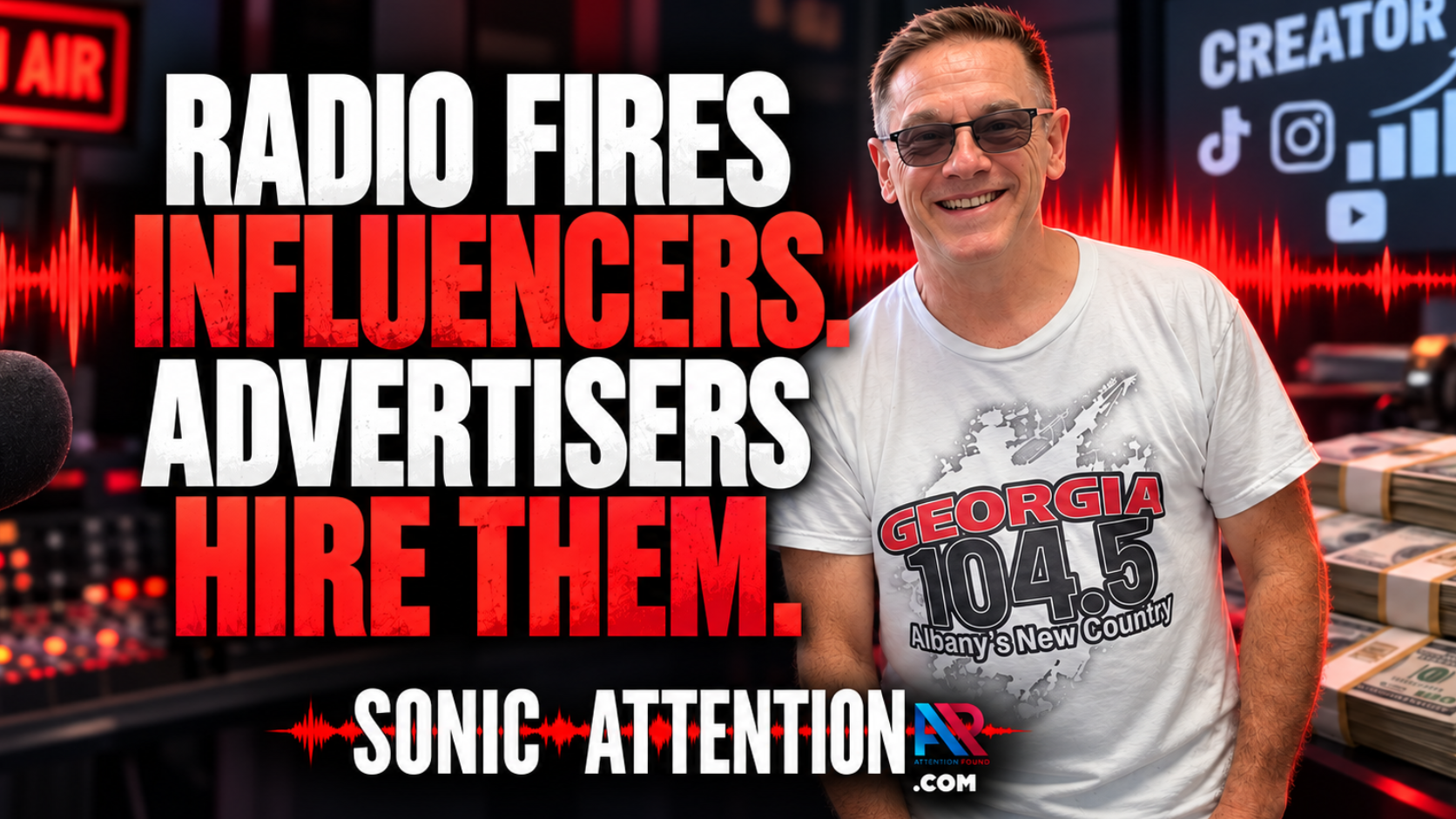
By Joe “Crash” Kelley
Apparently, a trusted voice becomes easier to recognize when you put a ring light in front of it.
Radio spent decades developing people who could make a local business familiar and give listeners a reason to walk through its door. We called them personalities.
Advertisers now call that influence. And they’re spending serious money on it.
The Interactive Advertising Bureau puts U.S. creator advertising spending at roughly $44 billion for 2026, up from $13.9 billion in 2021.[1]
Meanwhile, radio is showing experienced personalities the door.
Radio World’s June reporting on iHeartMedia’s cuts included BJ Holiday after 41 years at St. Louis’ KATZ and Bret Saunders after 28 years at Denver’s KBCO. The reductions reached major markets and smaller communities alike.[2]
That should make us ask an uncomfortable question:
Before we decided what these people cost, did we build a serious plan around what their relationships could earn?
An influencer earns attention and can persuade people to act. Anybody who has sold a personality endorsement or watched listeners support a charity because their favorite host asked should recognize the business.
Radio has been doing it for years. Our job titles just arrived before the fashionable terminology.
In Jacobs Media’s Techsurvey 2026, summarized by the Radio Advertising Bureau, 60 percent of AM/FM listeners surveyed named DJs, hosts, or shows as a main reason they listen. Favorite songs and artists scored 53 percent. The survey measures core radio listeners, giving us a view of what keeps people already using the medium attached to it.[3]
That attachment deserves a business plan.
And here’s the part that makes this especially interesting: The big broadcasters already understand the argument.
iHeart’s own advertising materials promote its hosts as trusted influencers. They describe campaigns combining audio, social content, video, and live appearances, including opportunities for local advertisers.[4]
Earlier this year, iHeart and TikTok announced a creator podcast lineup with GEICO as its exclusive launch partner. The accompanying TikTok Radio announcement included existing iHeart personalities in the host lineup.[5]
So broadcasters are investing in creators, including their own people. The question is how widely—and how seriously—that thinking reaches local talent.
The financial pressure is real. iHeart reported second-quarter 2026 podcast revenue of $162.1 million, up 20.7 percent from a year earlier. Its broader Multiplatform Group revenue fell 1.6 percent, and the company carried about $5 billion in total debt at June 30.[6]
Those numbers explain why growth and savings matter. They don’t establish whether a particular local personality could have generated enough business to justify the job.
But they do make the commercial potential of personality-driven content worth examining before another round of cuts.
If we can recognize a creator’s potential on TikTok, we can examine the potential of somebody who already knows the people shopping on Main Street.
A local advertiser needs relevant customers. A million followers scattered across the planet may be less useful to an Albany business than a smaller audience living nearby.
IAB’s CreatorFronts recap describes advertisers moving beyond celebrity deals toward portfolios that include smaller creators, with more emphasis on testing and measuring results.[1]
The $44 billion figure covers the whole creator advertising category. Winning any of that business requires a useful idea and evidence that it worked.
So let’s put a local personality in a proposal.
Consider a hypothetical campaign for an independently owned auto repair shop that wants more service appointments.
Build a month around a host who actually uses the shop. Let that personality explain the experience on the air. Produce two short videos with the owner answering questions drivers really ask. Schedule a brief appearance with a clear booking offer, and give listeners one easy appointment page.
Bring the host into the planning before the proposal is finished. The person who talks to the audience every day may have a better idea than the person who just opened the rate card.
Give each piece a purpose. The radio message builds familiarity. The videos show the people doing the work. The appearance creates a conversation. The booking page captures the response.
Then price the whole campaign.
For illustration, a $2,500 package might budget $400 for talent and $600 for production, promotion, and measurement. That leaves $1,500 before commissions, overhead, and the cost or alternative value of the airtime. These are planning figures; the remaining amount still has expenses to cover.
Run the math using your station’s actual costs. Track how much new business the package brings in, including renewals, so you can tell whether you’ve added revenue or repackaged a deal you already had.
Then follow the customer.
Count qualified inquiries, booked appointments, and completed jobs. Ask customers how they heard about the shop. Compare with the business’s normal results and account for other promotions or seasonal changes.
A booking link will miss some people who heard the host and later searched for the shop. Video views will include people who never needed a mechanic. Use several measures and know what each can tell you.
Audacy’s January partnership announcement with Podscribe shows where the industry is heading: attribution across much of its digital portfolio and select broadcast initiatives.[7]
A smaller station can start with a booking page, a client conversation, and a consistent follow-up process. The advertiser needs to know what happened after the message ran.
There is, of course, one detail radio has a remarkable talent for overlooking when it discovers another revenue opportunity.
Somebody has to do the work.
Calling a host a creator does not add six hours to Thursday.
If that person already has an airshift, production duties, and operational responsibilities, a new campaign needs scheduled time and support. Define the deliverables. Assign someone to shoot and edit the videos. Decide who follows up with the client.
And pay the talent.
A campaign fee or a clearly defined revenue share gives the personality a reason to help develop the business. Put the payment terms in writing. Agree on how the client can reuse the host’s voice and image, and whether personal social accounts are part of the deal.
Treat the relationship with listeners carefully, too. A host should endorse products they can honestly recommend. Paid social endorsements need clear disclosure, and nobody should claim an experience they never had. The FTC’s guidance is direct on both points.[8]
That relationship is what you’re selling. It took longer to build than the invoice takes to print.
Talent has responsibilities in this bargain. A familiar name still has to bring ideas, participate, and help create something the audience wants. Years on the payroll alone won’t make a campaign work.
But management has responsibilities, too. A host can’t build a profitable new product if the sales strategy begins and ends with throwing in an endorsement to close the spot order.
Before the next round of cuts, give the idea a serious trial. Pick a personality with a real local following. Find three suitable advertisers. Fund the time and production. Run a 90-day pilot with agreed business goals and a review of the campaign economics.
You may find the model needs work. You may find a new reason for clients to buy and renew.
Either result teaches you more than deciding the person has no commercial future because nobody built a proposal.
Radio has people who can earn attention in the communities advertisers need to reach. The industry should test what those relationships can produce.
Before you fire the influencer, try selling the influence.
Sources
- Interactive Advertising Bureau, September 25, 2026. 2026 IAB CreatorFronts Event Recap.
- Radio World, June 26, 2026. Sweeping Cuts Ongoing at iHeartMedia.
- Radio Advertising Bureau, 2026. Media Facts: Techsurvey 2026 results. Survey population: Fred Jacobs, “Radio’s Tectonic Shifts,” May 1, 2026. Survey population and context.
- iHeartMedia, March 4, 2026. When Influencers Feel Like Friends: How iHeart Creators Turn Trust into Business Results.
- iHeartMedia, March 12, 2026. iHeartMedia and TikTok Announce the Launch of TikTok Radio and the Inaugural Line-Up of Creator-Hosts for the TikTok Podcast Network.
- iHeartMedia, August 10, 2026. iHeartMedia, Inc. Reports Results for 2026 Second Quarter.
- Audacy, January 8, 2026. Audacy Partners with Podscribe to Enhance Attribution Measurement Across Its Digital Audio and Broadcast Portfolio.
- Federal Trade Commission, November 2019. Disclosures 101 for Social Media Influencers.